nivia 3D finder avalanche transceiver: 2026/27 overview
The nivia 3D finder is a new three-antenna avalanche transceiver with an unusual approach. According to nivia, GPS-assisted 3D technology guides the fine search directly and to centimetre accuracy without the conventional cross-bracketing process. That is a significant rescue claim, so this overview separates published specifications from our still-pending field test.
What is new about the nivia 3D finder?
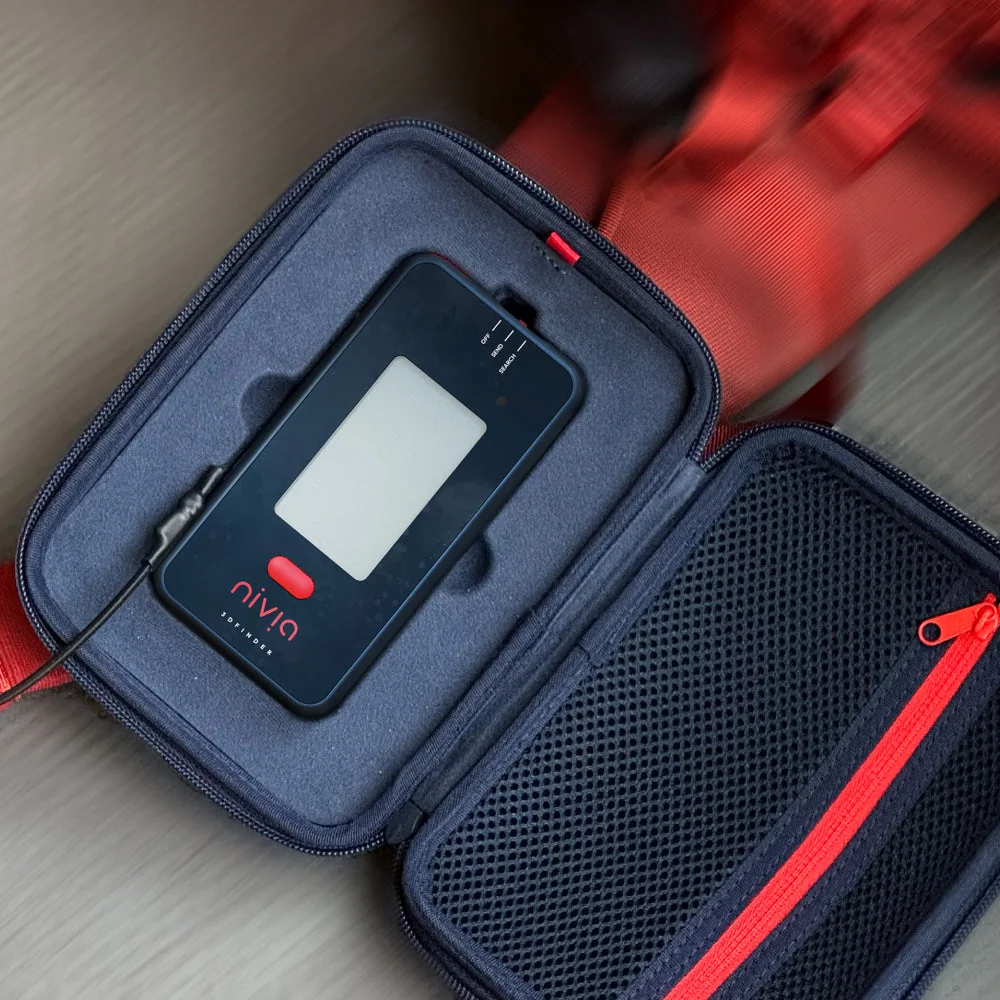
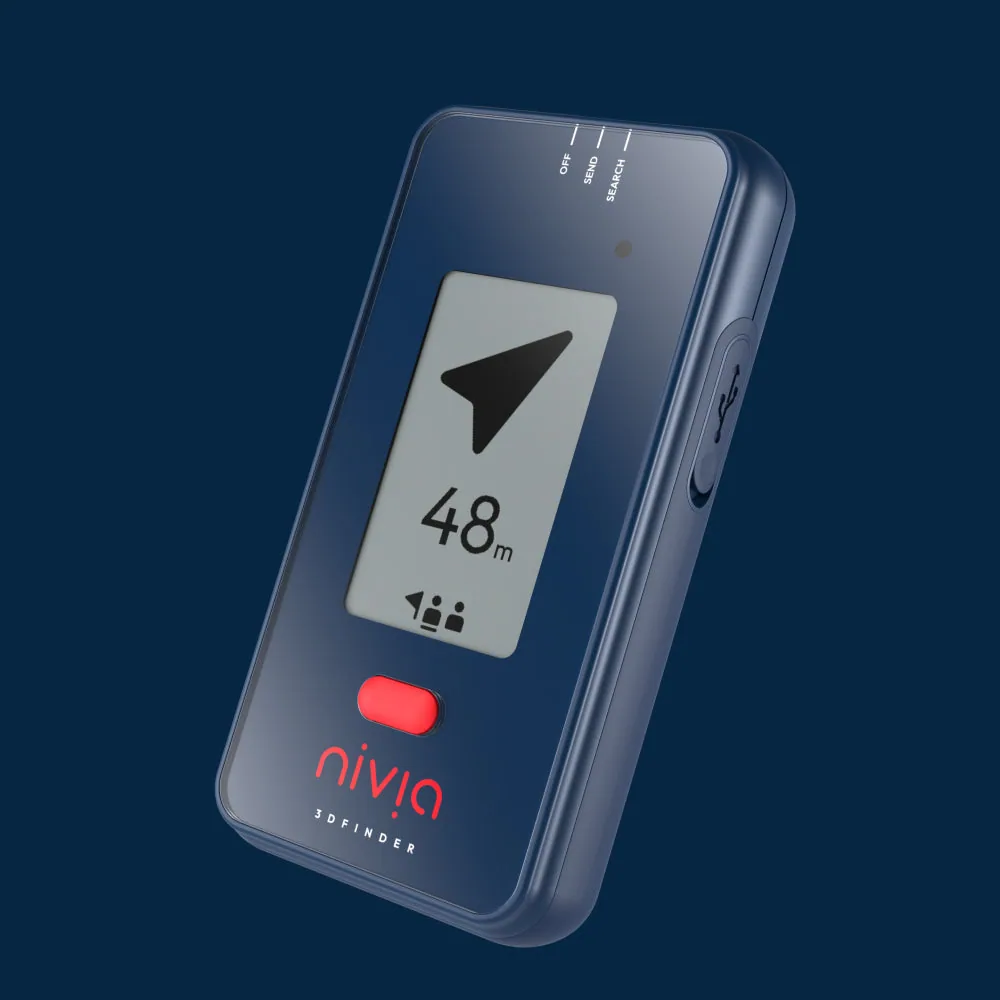
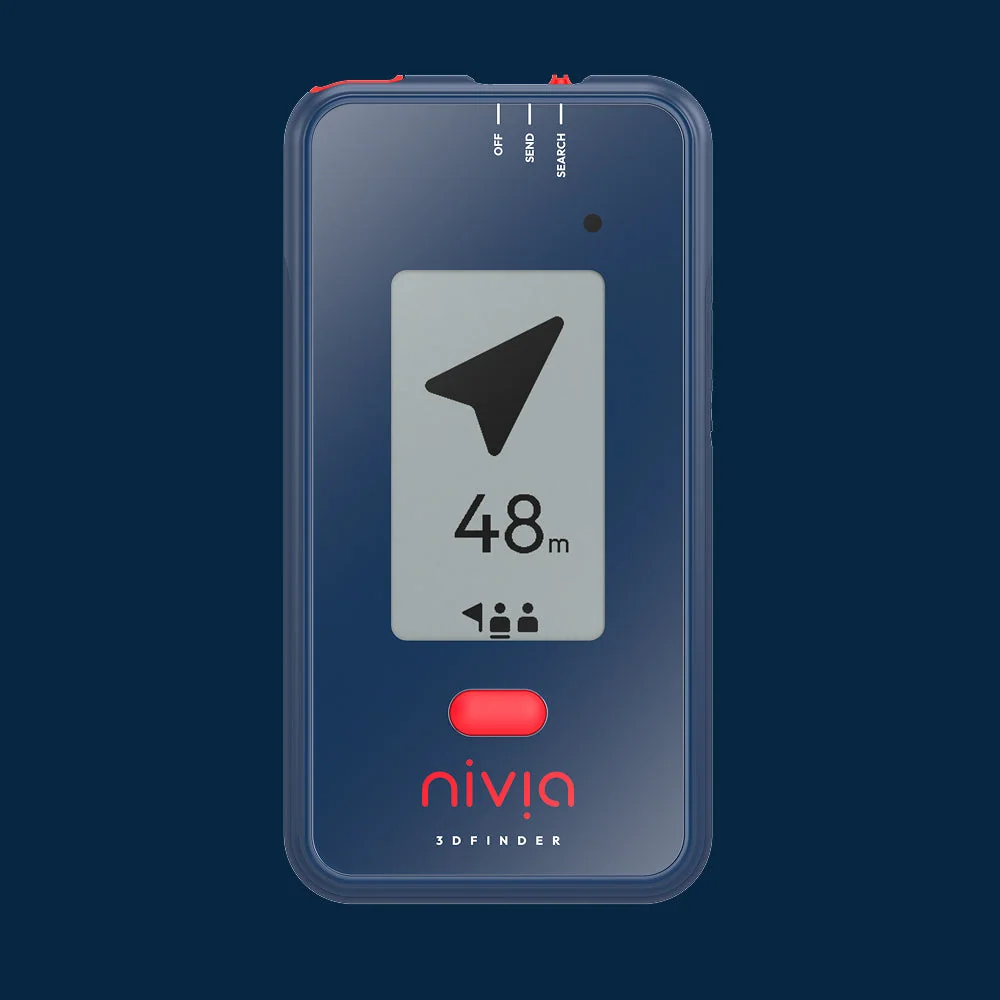
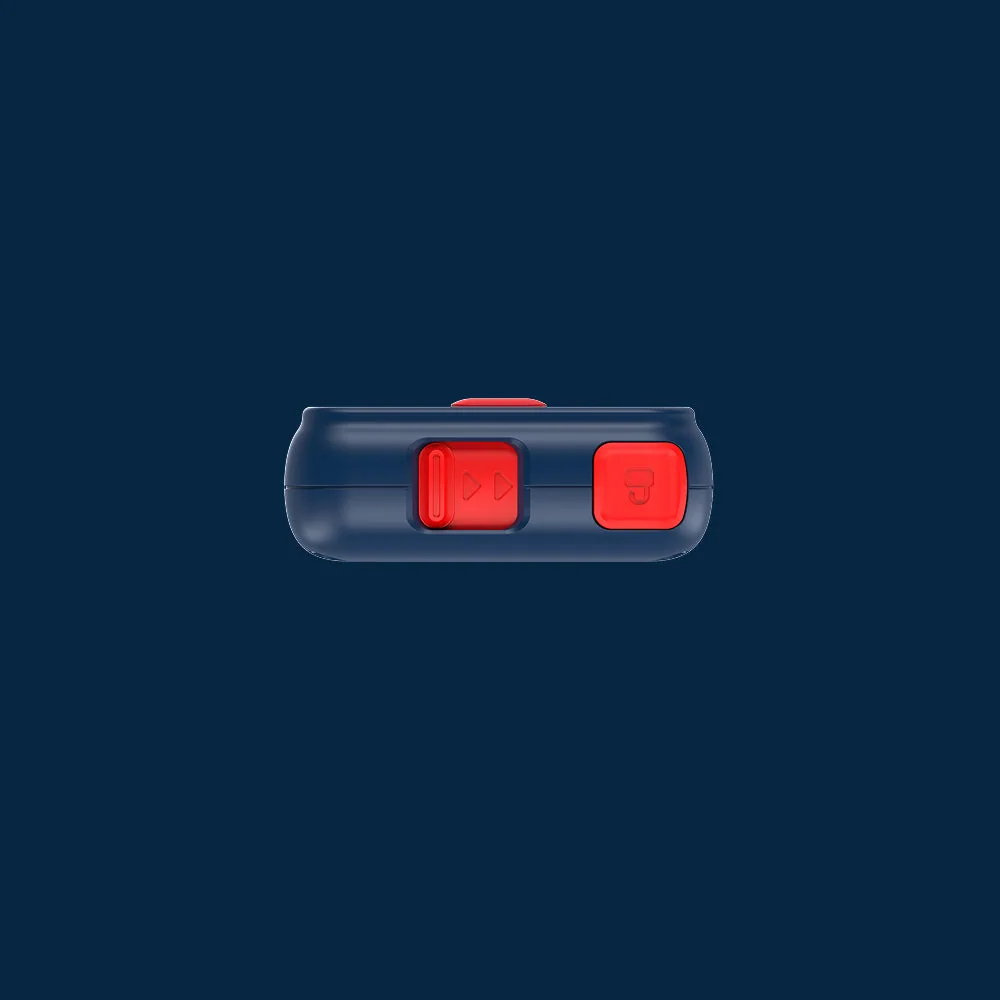
nivia describes GPS support independent of the 457 kHz signal and claims up to 30 percent time saving during fine search. Transmission and reception still use the international 457 kHz avalanche-transceiver standard. Controls combine a mechanical OFF/SEND/SEARCH switch with one button for marking, group check and configuration. A large display is intended to keep guidance readable in difficult light.
The key question is how reliably the additional 3D guidance works in cold conditions, under stress, with multiple burials, overlapping signals and awkward burial positions. A specification sheet cannot answer that conclusively.
Which specifications does nivia publish?
| Feature | Manufacturer specification |
|---|---|
| Antennas | 3 |
| Transmission frequency | 457 kHz |
| Range | X 50 m / Y 50 m / Z 40 m |
| Search-strip width | maximum 70 m under ICAR AVA REC 0007 |
| Battery | lithium-ion, up to 300 hours |
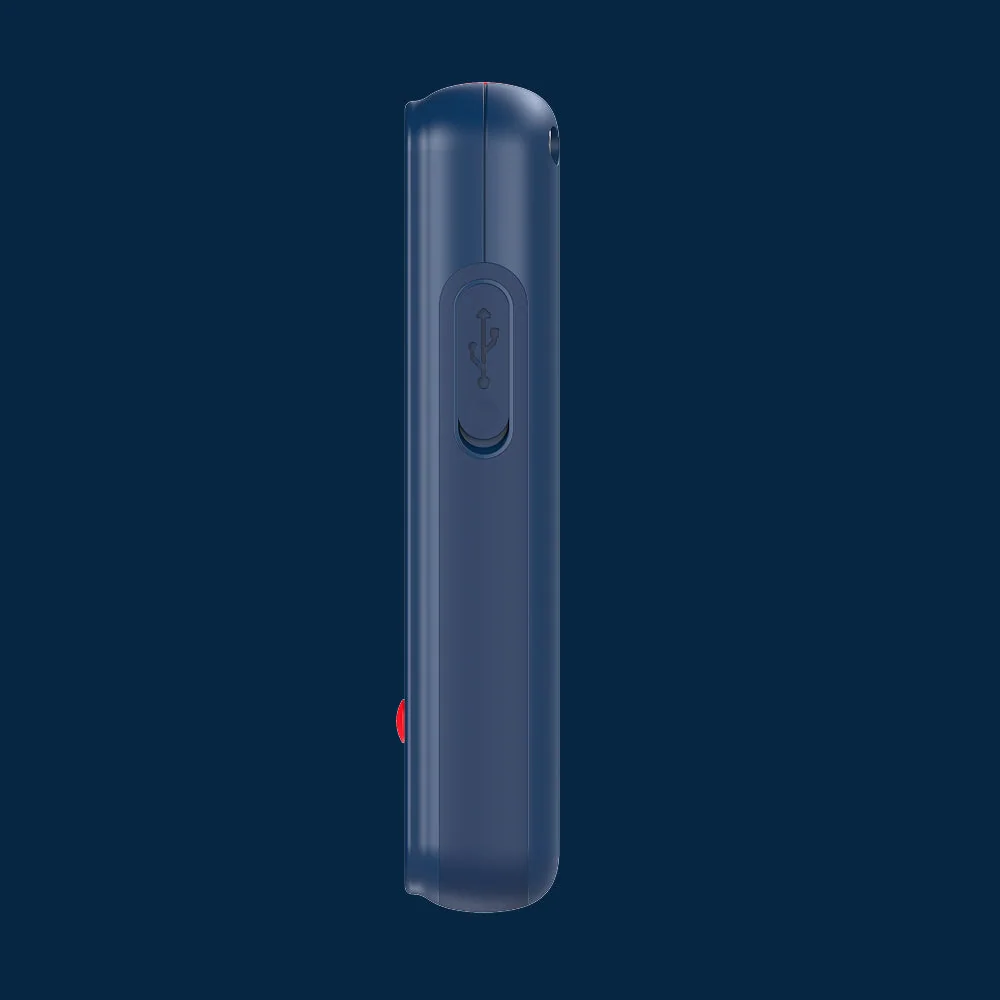
| Charging | USB-C with emergency phone charging |
| Wireless | Bluetooth Low Energy |
| Temperature range | −20 °C to +45 °C |
| Dimensions | 67 × 130 × 24 mm |
| Weight | 225 g |
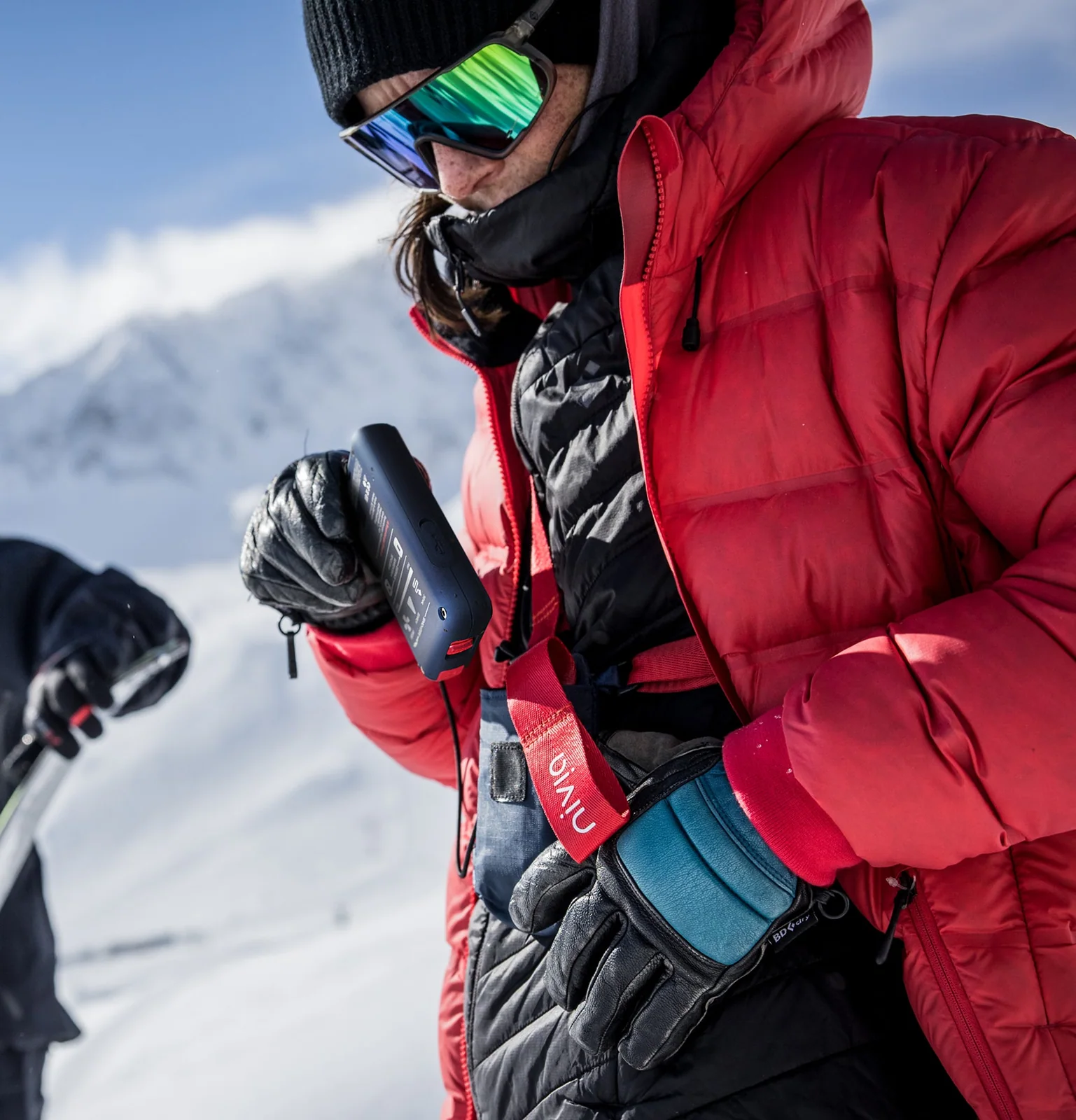
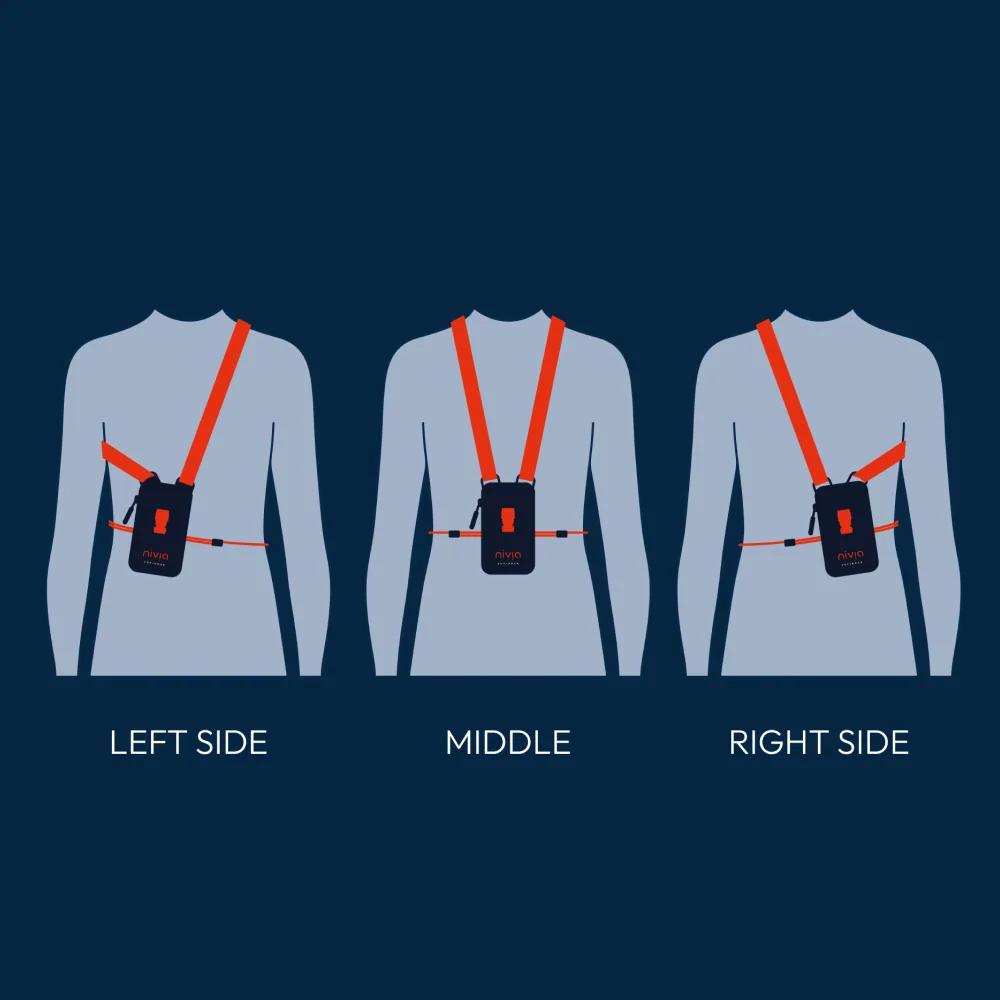
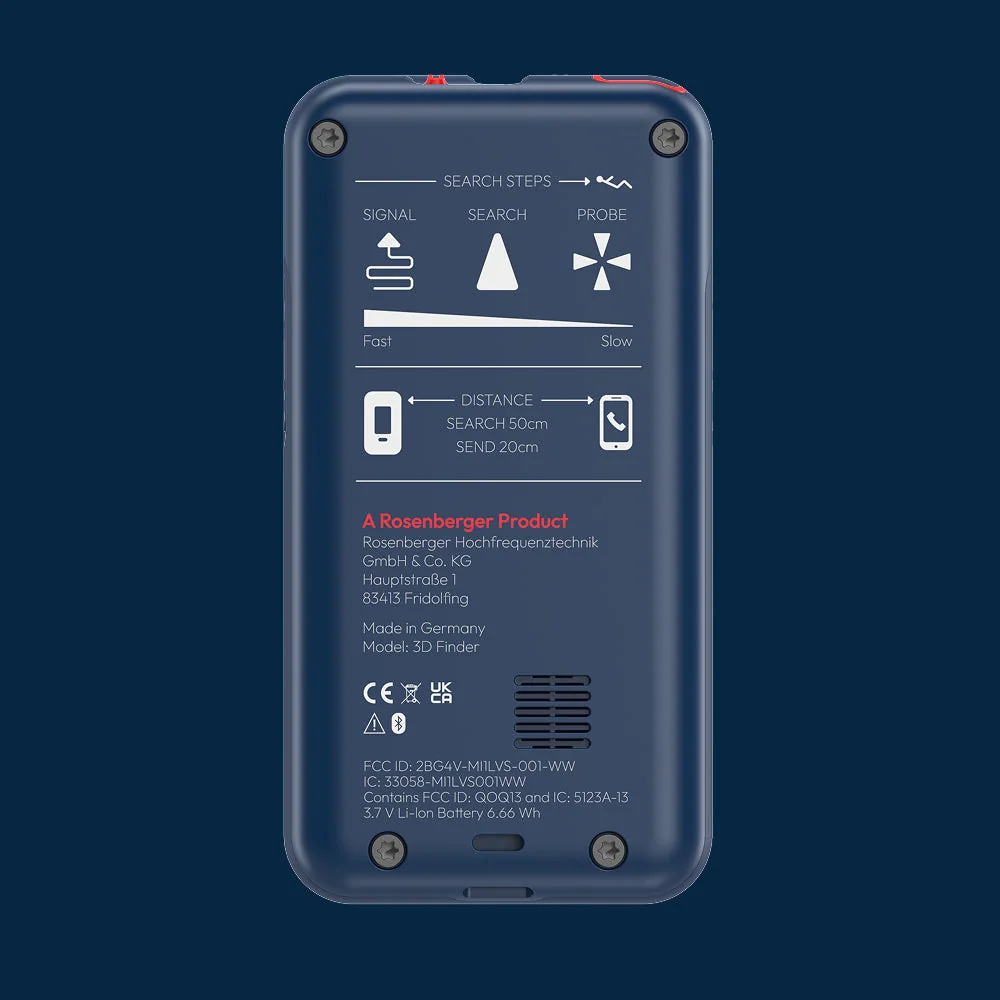
The manufacturer also lists a harness, app configuration, marking and group-check functions. The USB-C port can provide emergency power to a phone, while the transceiver’s own energy reserve is intended to take priority.
How do we assess the operating concept?
Direct 3D guidance could be particularly relevant during fine search, where controlled movements, low search height and accurate cross-bracketing take time. It still has to be clear enough that a trained user does not end up switching between two mental models under stress. A new interface therefore cannot replace systematic practice with buried transmitters.
The built-in rechargeable battery avoids disposable cells but requires a disciplined charge check before every tour and a clear long-term plan for battery ageing and service. Emergency phone charging is only a reserve; it must never reduce the transceiver below the energy margin required for the tour.
Have we tested the nivia 3D finder?
We have not yet tested the nivia 3D finder in the snow. This article therefore assesses only the published concept and manufacturer data. A meaningful field test needs repeatable checks of range, signal stability, fine search, multiple burials, glove operation, cold performance and search-to-send switching.
Until then, we assign neither a test score nor an award. The claimed time saving remains a manufacturer statement rather than our own measurement.
What else do you need besides the transceiver?
Every personal rescue kit needs a fully tensioned avalanche probe and a strong metal shovel. An up-to-date avalanche course, regular search and excavation drills and a group check before each tour are equally essential. Phones, smartwatches, heated gloves and other electronics must observe the prescribed spacing from the transceiver.
Current product information is available from nivia. Information checked on 2026-10-22.
Frequently asked questions about the nivia 3D finder
Does GPS replace the 457 kHz avalanche signal?
No. The 3D finder is specified as a digital three-antenna transceiver operating at 457 kHz. GPS-assisted technology adds guidance.
Do users still need to practise with it?
Yes. Every operating system must be trained in realistic conditions, including coarse and fine search, multiple burials, probing and strategic excavation.
Has Splitboarding.eu confirmed the claimed time saving?
No. Up to 30 percent time saving is a manufacturer statement. Our own field test is still pending.
Image Gallery (7 more photos)
Show all 3 more photos